

Last Updated: October 30, 2026
Quick Summary
A car sleeping mask is an eye covering that blocks light so you can rest in a parked vehicle. The best ones have a nose baffle, a snug temple seal, a contoured eye cup, breathable fabric, and a strap that holds its position when you roll over.
- Look for a nose baffle, since flat masks often leak light at the nose when reclined.
- A contoured eye cup keeps fabric off the eyelids and reduces pressure and blinking against it.
- Test the mask in a dark room with a phone flashlight at the nose and each temple.
- Wear the mask for 20 minutes reclined in the passenger seat with the interior light on before a trip.
- Turn the engine off while sleeping and never wear a sleep mask while driving.
Table of Contents
- How to Sleep Comfortably in a Car on a Long Drive
- Light-Blocking Sleep Mask Features That Matter in a Vehicle
- Contoured Sleep Masks for Side Sleepers: Fit and Pressure
- Testing Car Sleeping Masks: Method and What We Looked For
- Best Sleep Mask for Travel: Choosing by Use Case and Budget
- Safe Overnight Parking and Mask Mistakes to Avoid
- Booking Your Next Road Trip Sleep Setup
- Frequently Asked Questions
Sleeping in a car on a road trip is harder than it looks. For a broader comparison of car sleep accessories, see car sleep accessories roundup.
A car sleeping mask is an eye covering designed to block light so you can rest in a vehicle that is parked, not in a bed.
Light is the main issue. A parked car near a highway, a rest stop, or a lit parking lot can flood the cabin all night. Pairing the mask with the right support is covered in choosing an ergonomic car pillow.
Comfort matters too. A mask that presses on the eyelids or slides off when you roll over will wake you up.
How to Sleep Comfortably in a Car on a Long Drive
A mask helps most when the rest of your setup is sound. Start by planning a flat or near-flat surface. Reclined front seats, a folded rear bench, or a seat gap filler can all reduce the sag that makes a car uncomfortable. You can check whether a seat gap filler is worth it before buying one.
Sleeping position matters as well. Side sleepers usually need more room at the shoulders and head, so a small pillow that supports the neck can make a noticeable difference. Keep the mask on the forehead while you settle in, then lower it once you're comfortable.
Watch out: sleeping with the engine running for heat or cooling can cause carbon monoxide exposure, so turn the engine off and use layers and a sleeping bag instead.
Light-Blocking Sleep Mask Features That Matter in a Vehicle
Not every eye mask blocks light equally, and the features that matter in a car are different from the ones that matter in a bedroom.
The features that decide whether a mask works in a car are:
- Nose baffle. A soft flap or contoured bridge that sits over the nose is the single biggest defense against light leaking up from below. Flat masks with a straight bottom edge almost always leak at the nose when you are reclined.
- Temple and cheek seal. The mask needs enough surface area at the sides to sit flush against the temples and upper cheeks. A narrow mask leaves gaps at the corners of the eyes, which is exactly where side-window glare enters.
- Eye-cup depth. A contoured or 3D cup holds fabric off the eyelids, which reduces pressure and blinking against the fabric. Shallow cups press on the lashes; very deep cups can lift the edges away from the face.
- Fabric weight and layering. A dense, multi-layer build blocks more light than a thin single layer, but heavier fabric traps heat. In a car, where cabin temperature can climb quickly on a warm afternoon and hold warmth overnight, breathability matters as much as opacity.
- Strap geometry. A single thin elastic band concentrates pressure at the back of the head. A wider band or a split strap spreads the load and holds the mask in place when you shift from back to side.
A useful test is to put the mask on in a dark room, then aim a phone flashlight at the nose and each temple in turn. Any glow you can see is light that will reach you in a lit parking lot.
The 3D Sleeping Mask from Ride and Roam Co uses a contoured design that holds space around the eyes and reduces pressure on the eyes. It is lightweight and portable for travel use.
Check the strap as well. An adjustable strap lets you set a snug fit without over-tightening. A strap that is too tight can cause headaches and leave marks, while one that is too loose lets light leak in every time you roll over. The goal is a seal that stays put through movement, not maximum tension.
The features below decide whether a mask holds up in a parked car, and each one is covered in the section above.
| Feature | What it does | Why it matters in a car |
|---|---|---|
| Nose baffle | Soft flap or contoured bridge over the nose | Stops light leaking up from below when reclined |
| Temple and cheek seal | Enough surface area at the sides | Blocks side-window glare at the eye corners |
| Eye-cup depth | Contoured or 3D cup holds fabric off eyelids | Reduces pressure and blinking against fabric |
| Fabric weight and layering | Dense, multi-layer build | Blocks more light but can trap heat |
| Strap geometry | Wide band or split strap | Spreads load and keeps the mask in place |
Contoured Sleep Masks for Side Sleepers: Fit and Pressure
Side sleeping is the hardest case for any sleep mask, and it is the position most road-trippers end up in because car seats recline but rarely lie flat. When you lie on your side, your face presses into the pillow or seat, and a flat mask shifts, buckles, or pushes against your cheek.
A contoured mask holds a shape around the eyes so the fabric stays off the eyelids and the seal stays intact when your face is compressed against a surface. But contour alone is not enough in a car. The variables that decide whether a mask survives a night of side-sleeping are:
- Cup rigidity. A cup that is too soft collapses under the weight of your head and presses on the eye. One that is too stiff digs into the cheekbone. Look for a cup that holds its shape but flexes at the edges.
- Cheek and temple padding. Soft padding around the perimeter distributes pressure across the cheek and temple instead of concentrating it at one point. This is what prevents the marks and tenderness that show up after several hours.
- Cup width and depth. The cup needs to be wide enough that your eyelashes do not touch the fabric and deep enough that blinking does not brush the surface. If you wear glasses during the day, a deeper cup also keeps the mask from pressing on the bridge of your nose.
- Strap angle. A strap that sits too high slips up the back of the head when you roll; one that sits too low pulls the mask down over the nose. A split or adjustable strap lets you set the angle for your head shape.
A practical car-specific test: lie on your side in the reclined passenger seat for 15 minutes with the mask on and the interior light on. Then roll to the other side and repeat.
Pressure builds over hours, not minutes. If you wake with marks or tenderness around the eyes, try a looser strap setting first, then a different cup shape.
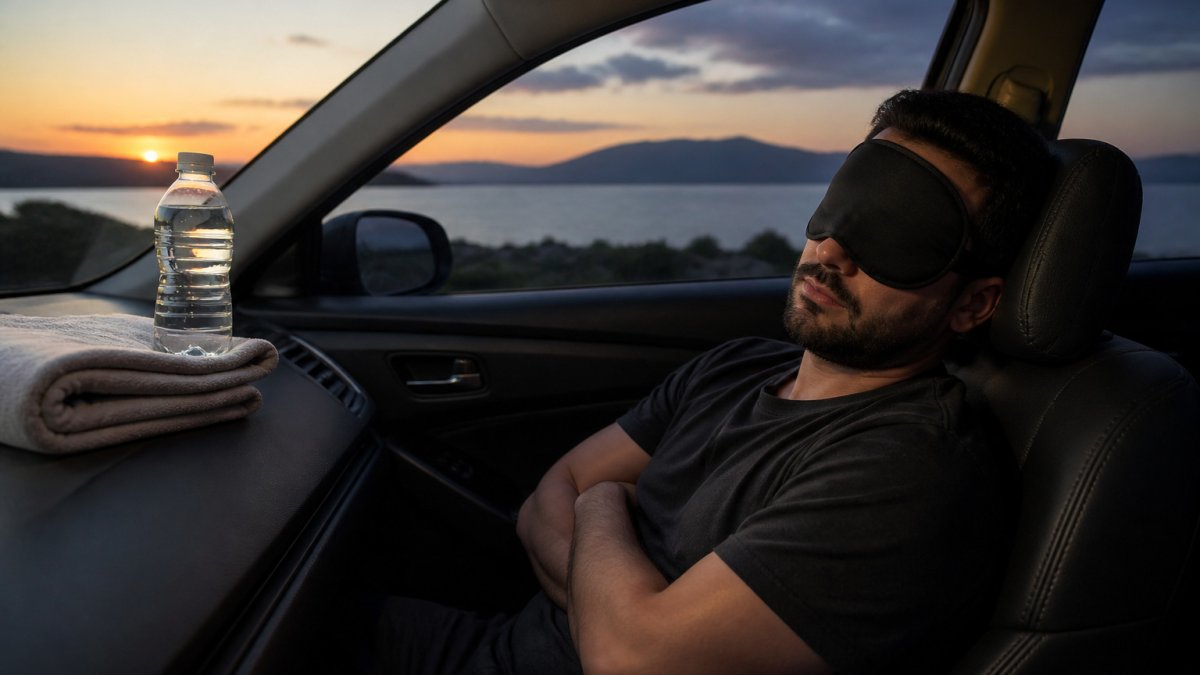
Testing Car Sleeping Masks: Method and What We Looked For
Reviews of sleep masks often rely on marketing copy, so it helps to be clear about what matters and how to judge it. When you assess a mask for car use, check these points in order:
- Light blocking: Wear the mask in a dark room, then near a light source, and note any leakage at the nose and temples.
- Fit: Lie on your back and on each side, and check whether the mask stays put.
- Pressure: Wear it for 30 minutes and check for pressure on the eyelids or cheekbones.
- Heat and breathability: Notice whether the fabric traps warmth after a short period.
- Strap comfort: Look for a strap that adjusts without digging in or slipping.
Best Sleep Mask for Travel: Choosing by Use Case and Budget
The right mask depends on how you travel. A short commute or a single overnight stop calls for a simple, affordable mask. A cross-country trip, where you sleep in the car most nights, justifies a denser, more comfortable option.
- Occasional overnight stops: A lightweight contoured mask is usually enough. The 3D Sleeping Mask at $16.99 CAD is a practical starting point. Best for: people who need a reliable mask without much spending. Skip if: you need full blackout in very bright lots.
- Frequent road trips: Prioritize a snug fit and breathable fabric, and pair the mask with a pillow for head support.
- Side sleepers: Choose a contoured shape and check the pressure points before committing.
If you're comparing products beyond eye masks, our buyer's guide to ergonomic car pillows covers support options that work alongside a mask.
Safe Overnight Parking and Mask Mistakes to Avoid
A mask is only one part of a safe overnight setup. Park in a well-lit, public, and legal location, and avoid rest areas or lots where overnight parking is restricted. Lock the doors, keep valuables out of sight, and keep a phone charged for emergencies.
Common mistakes include wearing a mask that is too tight, sleeping with the engine running, and skipping ventilation. Crack a window slightly for airflow, using a secure cover if you need privacy. A mask that fits poorly or traps heat can make a short night feel much longer, so test it before the trip rather than on the road.
Booking Your Next Road Trip Sleep Setup
Start with the mask, since it solves the light problem that most people underestimate. Then add a pillow and, if your back seat is uneven, a gap filler. If you're ready to choose, the 3D Sleeping Mask from Ride and Roam Co offers a contoured, light-blocking fit at $16.99 CAD, and it's available at get your 3D Sleeping Mask.

Frequently Asked Questions
What is the best sleep mask for a road trip?
The best choice depends on how you sleep and where. For side sleepers, a contoured mask with a soft, breathable shell avoids pressure on the eyelids. For light control in a parked car, look for a mask that seals around the nose and temples and has an adjustable strap. The 3D Sleeping Mask from Ride and Roam Co is a lightweight, contoured option priced at $16.99 that suits travel and naps, with a soft breathable fabric and a contoured fit for reduced eye pressure.
Do sleep masks help you sleep in a car?
A sleep mask blocks the overhead light, streetlights and headlights from passing cars that disturb sleep in a vehicle. It will not block noise, cold or limited seat space, so it works best alongside a sensible seat position and ventilation. Test the mask on a short nap before a long trip to confirm it blocks enough light for your window setup.
What features should I look for in a sleep mask for car travel?
Focus on four things: light blocking around the edges, a fit that does not press on your eyes, breathable material that will not overheat in a warm cabin, and a strap that stays put when you shift position. Avoid masks that slip when you turn your head. Lightweight masks are easier to pack and wear for short naps as well as overnight rests.
Are contoured sleep masks more comfortable for long trips?
Contoured masks usually feel better for side sleepers and anyone who wears glasses or has sensitive eyelids, because the shape leaves room around the eyes. Flat masks can press on the eyelids when you lie on your side in a seat. Over a long drive, a contoured mask with a soft strap is generally the more comfortable choice, though fit is personal and worth testing before you travel.
