

Last Updated: October 24, 2026
Quick Summary
The best car sleep accessories in 2026 start with a flat surface: a self-inflating mat or air-deck platform sized to your measured cargo area, then support, light blocking and ventilation. Budget in that order, because a $60 mat on a flat floor beats a $200 pillow on a sloped one.
- Measure the flat floor with seats folded and buy a mat sized to that number.
- Choose at least 7.5 cm (approximately 3 inches) of thickness if you sleep on your side.
- Recline the seat, then fit the headrest so your chin stays level.
- Crack two windows on opposite sides and add a small battery-powered fan.
- Never run the engine while you sleep because carbon monoxide has no smell.
Table of Contents
- What to Look for in Car Sleep Accessories
- Best Car Camping Sleeping Pads and Mattresses
- How to Sleep Comfortably in Car Seats
- Car Window Sun Shades for Privacy and Light Blocking
- Ventilation and Temperature Control for Overnight Stays
- Safety and Vehicle Fit: What to Check Before You Sleep
- Conclusion
- Frequently Asked Questions
What to Look for in Car Sleep Accessories
Sleeping in a vehicle is a compromise, and the best car sleep accessories in 2026 are the ones that shrink that compromise without pretending it doesn't exist. At Ride and Roam Co, we sell comfort gear for people who spend real hours on the road, so we have a bias: the flat surface matters more than the gadget. Get the sleeping platform right and everything else is refinement.
Here is the framework we use when we assess a setup:
- Surface first. A self-inflating mat or air-deck platform that levels the cargo area does more for sleep quality than any accessory layered on top. Luno Life's vehicle-fit guidance on flat cargo space makes the same point: a nearly flat floor is the design feature that decides whether a vehicle works at all.
- Support second. Memory foam and contoured shapes hold their form through the night; loose fill compresses by 2 a.m.
- Light and privacy third. Window covers and a contoured sleep mask do the work that a bare windshield cannot.
Best Car Camping Sleeping Pads and Mattresses
The best car camping sleeping pads are self-inflating or foam-based models sized to your actual cargo dimensions, not to a marketing claim. Measure the length and width of the flat floor with the seats folded, subtract a few centimeters for door clearance, and buy to that number. Outside Online's coverage of modular sleep platforms tracks the shift toward self-inflating mats and air-deck systems built around flat cargo space, and that is where the category has genuinely improved.
A few practical notes from how we would shop it:
- Self-inflating mats pack smaller and suit one person; inflation takes a few minutes with a pump or by mouth. Look for a thickness of at least 7.5 cm (approximately 3 inches) if you sleep on your side, because thinner mats bottom out at the hip.
- Foam mattresses are heavier and bulkier but hold shape and insulate better in cold weather. A 10 cm (approximately 4 inches) memory-foam or high-density foam mattress is the usual pick for full-time vehicle sleeping, but check that it can fold or roll to fit behind the seats when not in use.
- Air-deck platforms fill the gap between folded seats and the cargo floor, which is the single biggest comfort upgrade in most SUVs and crossovers. These platforms typically use a combination of inflatable base and foam topper, and they are designed around specific seat-fold heights rather than universal fit.
REI Co-op's sleeping pad guidance singles out the Exped MegaMat as a top-tier option for vehicle-based camping, and it earns that reputation on thickness and insulation rather than gimmicks. The MegaMat line comes in several lengths, and the longer versions suit taller sleepers who would otherwise hang off the end.
Fit by vehicle type
Fit is where most buyers get caught. A few common patterns:
- Sedans and hatchbacks: the flat floor is usually short and narrow, often around 150 to 180 cm (approximately 60 to 70 inches) long and 100 cm (approximately 40 inches) wide with the rear seats folded. A single self-inflating mat or a custom air-deck sized to the trunk opening works better than a double mattress that bulges against the doors.
- SUVs and crossovers: many have a load floor that is nearly flat but with a lip at the tailgate and a step where the second row folds. Measure the height difference between the folded seat and the cargo floor; an air-deck or a foam wedge can level that step.
- Trucks: bed length varies widely, and a short bed may not fit a standard mattress without overhang. A bed mat or a custom cut foam pad sized to the wheel wells is often the practical answer, and a bed rack or cap changes the usable height.
A common pattern is that the published mattress dimensions include a few inches of taper at the head or foot, so the usable flat area is smaller than the spec sheet suggests. If you are close to the limit, size down rather than up.
Browse the car-comfort collection to see the pieces we stock for building a sleeping setup.
How to Sleep Comfortably in Car Seats
Learning how to sleep comfortably in car seats comes down to three adjustments: recline the seat as far as it goes, support the neck so your head does not drop forward, and block light. A reclined front seat is fine for a nap, not a full night. For anything longer than two hours, move to the back.
Our memory foam car headrest and lumbar support set is the piece we would start with. It is $49.99 as a single piece or a bundle, uses synthetic fiber filling that holds its shape, and comes in black, gray or pink to match most interiors.

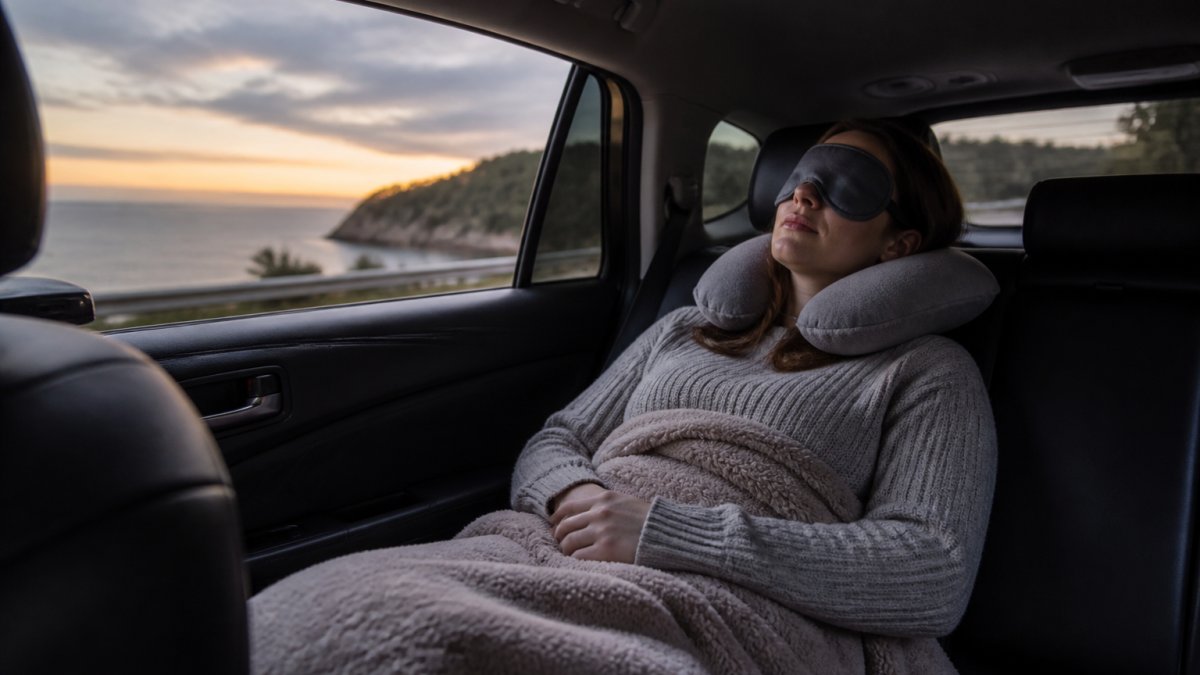
Here are the seat-sleeping pieces we stock, with prices as listed.
| Product |
|---|
| --- |
| Memory foam car headrest and lumbar support set |
| U-shaped travel neck pillow |
| Adjustable headrest |
| 3D sleeping mask |
| Oversized wearable blanket hoodie |
| Thermolite hooded sweatshirt |
Car Window Sun Shades for Privacy and Light Blocking
Car window sun shades for privacy are the most underrated item in any car sleeping kit. Light is the main reason people wake at 5 a.m. in a parking lot, and a set of cut-to-fit shades changes that more than any other single purchase.
For the gaps shades cannot reach, a contoured sleep mask is the practical answer. Our 3D sleeping mask at $16.99 uses a molded shape that blocks light without pressing on the eyes, which matters if you sleep on your side.
Memory Foam Car Headrest, Lumbar Support or Bundle (1 or 2 piece) →

Ventilation and Temperature Control for Overnight Stays
Ventilation is where most car sleeping setups fail, and it is the point seasoned car campers raise first. A standard passenger vehicle has limited air volume, and a closed cabin turns humid within an hour.
Temperature swings harder than people expect. A wearable layer beats a loose blanket because it stays on when you turn.
Link the wearable blanket hoodie for readers who want a warm layer that stays put overnight.

Planning for heat, cold, and wet
The gear that works in July is not the gear that works in October. A few practical rules:
- Hot nights: prioritize airflow over insulation. A battery-powered fan that runs on USB power or disposable batteries can move air for several hours, but check the runtime at the speed you will actually use. A fan rated for 10 hours on low may run only 3 hours on high. Park in shade if you can, and use reflective window covers on the sunny side.
- Cold nights: insulation matters more than airflow, but you still need a cracked window to manage condensation. A foam mattress insulates better than an air mattress because air inside the mattress cools to the ambient temperature. Wear a hat and keep the sleeping bag and blanket dry.
- Wet and humid conditions: condensation forms on the coldest surfaces, usually the windows and the roof. A microfiber towel kept handy lets you wipe down glass before it drips. Mesh window shades that allow airflow reduce condensation compared with solid covers.
Power and runtime planning
Most ventilation and comfort gear now runs on USB power or rechargeable batteries. A common pattern is that a 10,000 mAh power bank will charge a phone several times but run a small fan for only a few hours at higher speeds. If you rely on a fan overnight, carry a second power bank or choose a fan that accepts disposable batteries as a backup.
Safety and Vehicle Fit: What to Check Before You Sleep
Safety comes before comfort, every time. Park legally and on level ground, engage the parking brake, and never run the engine while you sleep, because carbon monoxide has no smell and no early warning. According to Health Canada's guidance on carbon monoxide safety, it is a silent killer.
Fit is the second check.
Read the ergonomic car pillow buying guide for a closer look at choosing pillows that fit properly and support the neck.
Conclusion
Building a setup that actually works takes more thought than most gear lists admit, and the flat surface, the light, and the air matter more than the accessories stacked on top. That is the order we would spend in, and it is the order we build our range around. Ride and Roam Co stocks the comfort pieces that finish the job: memory foam headrest and lumbar support, a contoured 3D sleep mask, and wearable layers that stay on through the night.
Frequently Asked Questions
What are the best ways to sleep comfortably in a car?
Start with a flat sleeping surface: a self-inflating pad or air mattress designed for your vehicle's cargo area. Add a supportive neck pillow like the U-shaped memory foam option and a 3D sleeping mask to block light. Crack a window for airflow, use sun shades for privacy, and wear a warm layer such as a Thermolite hoodie. The goal is to mimic a bed setup as closely as possible within your car's dimensions.
Are there specific safety regulations for sleeping in a vehicle?
In Canada, rules vary by province and municipality. Many municipalities have bylaws restricting overnight parking on public streets, so check local signage and rules before you stop. Never sleep with the engine running in an enclosed space due to carbon monoxide risk. Park in well-lit, legal areas such as designated campgrounds, rest stops, or private lots that permit overnight stays. Always keep a window cracked for ventilation. According to [Transport Canada](https://tc.canada.ca/en/road-transportation/safety-recall-inspections/carbon-monoxide-safety-vehicles), carbon monoxide poisoning from vehicle exhaust is a serious risk.
What is the best car sleeping pad for long-distance travel?
Look for a self-inflating pad or air mattress that matches your vehicle's flat cargo area. The Exped MegaMat is a top-tier option recommended by outdoor gear experts for vehicle-based camping. Prioritize thickness for insulation, an inflation time under five minutes with an electric pump, and compact storage when deflated. Measure your back seat or trunk before buying to ensure the pad fits without gaps.
How do I keep my car ventilated while sleeping inside?
Crack at least two windows on opposite sides to create cross-ventilation. Use mesh window screens or sun shades that allow airflow while keeping bugs out. A portable fan powered by a 12V outlet helps circulate air on warm nights. Avoid blocking all vents, and never run the engine while parked in an enclosed space. In cold weather, use a Thermolite hoodie or wearable blanket instead of idling for heat.
What are the essential car camping accessories for beginners?
Start with a sleeping pad or air mattress, a supportive neck pillow, and a light-blocking eye mask. Add car window sun shades for privacy, a portable fan for ventilation, and a warm layer like a wearable blanket hoodie. For organization, a seat gap organizer and backseat organizer keep essentials within reach. These basics cover comfort, privacy, temperature, and power for your first overnight stay.
