

Table of Contents
- What to Look for in the Best Car Backseat Organizers for Kids
- Comparison Table: Top Backseat Organizers at a Glance
- 1. Car Backseat Organizer (1 Piece): Best All-Round Seatback Storage
- 3. Car Seat Gap Filler Organizer (2 Piece): Best for Small Item Clutter
- 4. Leather Car Seat Gap Organizer (1 Piece): Best for Style and Easy Access
- How to Choose a Backseat Organizer That Fits Your Kids and Your Vehicle
- Safety, Car Seat Compatibility, and Materials That Last
- Frequently Asked Questions
Last Updated: October 21, 2026
What to Look for in the Best Car Backseat Organizers for Kids
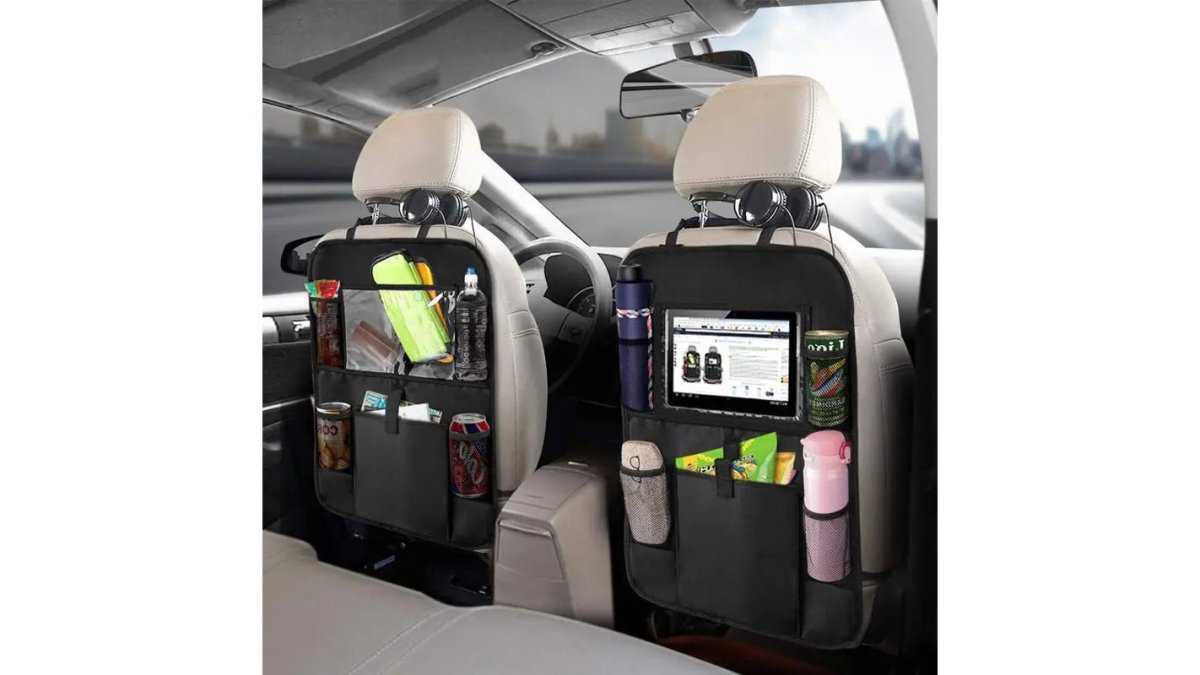
A car backseat organizer is a fabric or leather panel that straps to the back of a front seat and holds the small items kids scatter across a vehicle: toys, snacks, books, wipes, and tablets.

A seatback organizer solves the "everything ends up on the floor" problem. A gap filler solves the "everything disappears between the seats" problem. Most families with young kids need the first, and anyone who has fished a phone out from under a seat needs the second.
Comparison Table: Top Backseat Organizers at a Glance
| Product | Price (CAD) | Pieces | Best For | Material |
|---|---|---|---|---|
| Car Backseat Organizer | $21.99 | 1 | Families with kids who need toys, snacks, and a tablet within reach | Durable cloth |
| Car Seat Organizer with Tablet Holder (Upgraded) | $21.99 | 1 | Screen time on longer drives and road trips | Durable cloth |
| Car Seat Gap Filler Organizer | $16.99 | 2 | Small item clutter between the seats | PU material |
| Leather Car Seat Gap Organizer | $19.99 | 1 | Parents who want easy access and a finished look | Premium leather |
A common mistake is buying a gap filler when the real problem is seatback clutter. If your kids are in the back, start with the seatback organizer.

1. Car Backseat Organizer (1 Piece): Best All-Round Seatback Storage
Our top pick for most families is the Car Backseat Organizer.
3. Car Seat Gap Filler Organizer (2 Piece): Best for Small Item Clutter
Gap fillers solve a different problem. The Car Seat Gap Filler Organizer is a two-piece set that slides into the seams between the front seats and the center console, catching pens, cards, earbuds, and coins before they disappear.
The PU material resists wear and moisture, and the set comes in Beige, Black, Brown, and Red to match your interior. Installation is a snap-in fit with no tools or adhesives.
One warning before you order: some vehicles have a gap too small for the filler to seat properly.
Pros and Cons
Pros:
- Two pieces cover both front seats
- Leak-proof PU resists moisture and debris
- No tools or adhesives needed
- Four color options
Cons:
- Will not fit vehicles with a very narrow seat gap
- Designed for front seats, not the back row
4. Leather Car Seat Gap Organizer (1 Piece): Best for Style and Easy Access
If you want the gap filled but prefer a finished look, the Leather Car Seat Gap Organizer is the pick.
The leather finish comes in Brown, Beige, Black, and Red. It is a one-piece design, suiting a driver who wants their own items organized rather than both front seats covered.
The two-piece PU set is about catching clutter; the leather piece keeps the things you reach for most often in one predictable spot.
Pros and Cons
Pros:
- Premium leather look that matches most interiors
- Rectangle shape fits snugly in the seat crevice
- Keeps phone, keys, and wallet within easy reach
- Four classic colors
Cons:
- One piece only, so it covers one seat
- Same narrow-gap limitation as any crevice organizer
How to Choose a Backseat Organizer That Fits Your Kids and Your Vehicle
Choosing a backseat organizer comes down to matching the product to your child's age and stage, your vehicle's seat geometry, and how often you move it between cars. The right answer changes dramatically between a toddler who needs wipes within arm's reach and a school-age child who wants a tablet at eye level.
Age and stage: what changes between toddlers and school-age kids
Toddlers (roughly 1-3 years). The child is not reaching for items independently, so the organizer's job is to keep supplies accessible to the adult in front.
Preschoolers (roughly 3-5 years). Children start reaching for their own snacks and toys, so pocket height and opening size matter.
Car Backseat Organizer (1 piece) →
School-age children (roughly 6-12 years). Kids this age can manage zippers, clips, and elastic straps, so organizers with more compartment variety work well.
Vehicle fit: measure these three things before you buy
Seatback shape varies more than most buyers expect. Before ordering, check three measurements. First, the distance between the headrest posts, since most strap systems loop around or clip to them and wide or narrow spacing can make the organizer hang off-center.
For gap fillers, measure the seam between the seat and the center console along its full length, not just at the front, a gap that looks generous near the dashboard can narrow toward the rear, and a filler that fits at the front may not seat at the back.
Attachment method: straps versus clips
Strap systems that loop around the headrest posts are the most common, the easiest to move between vehicles, and the most forgiving of seatback shape variation because strap length is usually adjustable. Clip systems install and remove faster but can work loose over time, especially if a child pulls on a pocket. If you regularly move the organizer between cars or rent vehicles on trips, favor straps.
Safety, Car Seat Compatibility, and Materials That Last
Safety comes before storage. A backseat organizer should never sit between a child car seat and the vehicle seat, and it should not interfere with the seat belt path or the car seat's own harness. The safest placement is on the back of the front seat in front of the child, not behind the car seat and not wrapped around it.
Car seat compatibility: what to check before you install
Car seats are tested and certified as complete systems, and anything added to the vehicle seat can change how the car seat performs in a crash. Transport Canada's child car seat guidance sets out how car seats must be installed and secured, and it is the reference to follow before you add any accessory. Transport Canada's child car seat guidance The practical rule is simple: the car seat should be installed exactly as the manufacturer instructs, with no extra fabric, straps, or panels between the car seat and the vehicle seat, and no accessory that changes the angle or tightness of the installation.
A common mistake is threading an organizer's strap behind the car seat or around its base to keep it in place, which can create slack in the installation or interfere with the harness path.
Airbag zones matter too. Side airbags deploy from the outer edge of the seatback in many vehicles, and a panel that overhangs the side of the seat can interfere with that deployment path.
Materials: what survives real use
Cloth is soft and light but needs spot cleaning and can thin at the corners where straps pull. Look for stitched seams rather than glued ones and reinforced strap points, since those fail first on a cloth organizer.
Organizers typically fail at the strap attachment points first, then the pocket seams, then the zippers. Before you buy, check whether the strap points are bar-tacked or double-stitched, whether the pocket seams are reinforced, and whether the zippers are metal or plastic.
Health Canada's guidance on children's products is a useful reference for what to check on any product a child uses, including small parts, cords, and labeling. Health Canada's guidance on children's products It is worth a read before you buy, particularly if the organizer has small detachable parts or loose cords that could pose a strangulation or choking risk near a young child.
Cleaning and long-term care
Cloth organizers should be spot cleaned with mild detergent and air dried, not machine washed, because straps and seams can distort in a machine. PU and leather wipe down with a damp cloth; avoid alcohol-based cleaners on leather because they strip the finish. Check strap tension after the first week and tighten as needed, since straps stretch slightly with repeated loading.
Frequently Asked Questions
Do backseat organizers fit all car seats?
Most backseat organizers use adjustable straps and fit a wide range of front seat backs, but no single design is universal. Check the strap length and the shape of your seat headrest before buying. Gap filler organizers are different: they slot into the seam between the seat and center console, so measure that gap first. Some vehicles have a gap too narrow or too wide for a filler to sit correctly, which is why a quick measurement saves a return.
Are backseat organizers safe to use with child car seats?
A seatback organizer straps to the front seat, not to the child car seat, so it does not interfere with the car seat harness or its installation. Keep the organizer clear of the car seat's path and do not hang heavy items that could swing loose in a sudden stop. Follow the car seat manufacturer's instructions and never attach anything directly to the car seat shell or harness.
How do you clean a car backseat organizer?
Cloth organizers like the Car Backseat Organizer can be wiped with a damp cloth and mild soap, then air dried fully before use. Leather and PU gap fillers should be wiped with a soft damp cloth and kept away from harsh cleaners that dry out the material. Empty the pockets weekly so crumbs and wrappers do not build up, and check straps for wear every few months.
What can you store in a kids' backseat organizer?
Typical pockets hold tablets, phones, snacks, water bottles, books, and small toys. A tablet holder keeps a screen at eye level for entertainment, while side storage options add room for bulkier items. Gap fillers are better for small loose objects like pens, cards, and earbuds. Keep heavy or sharp items out of reachable pockets, and avoid overloading one side so the organizer hangs evenly.